Ascension Bay
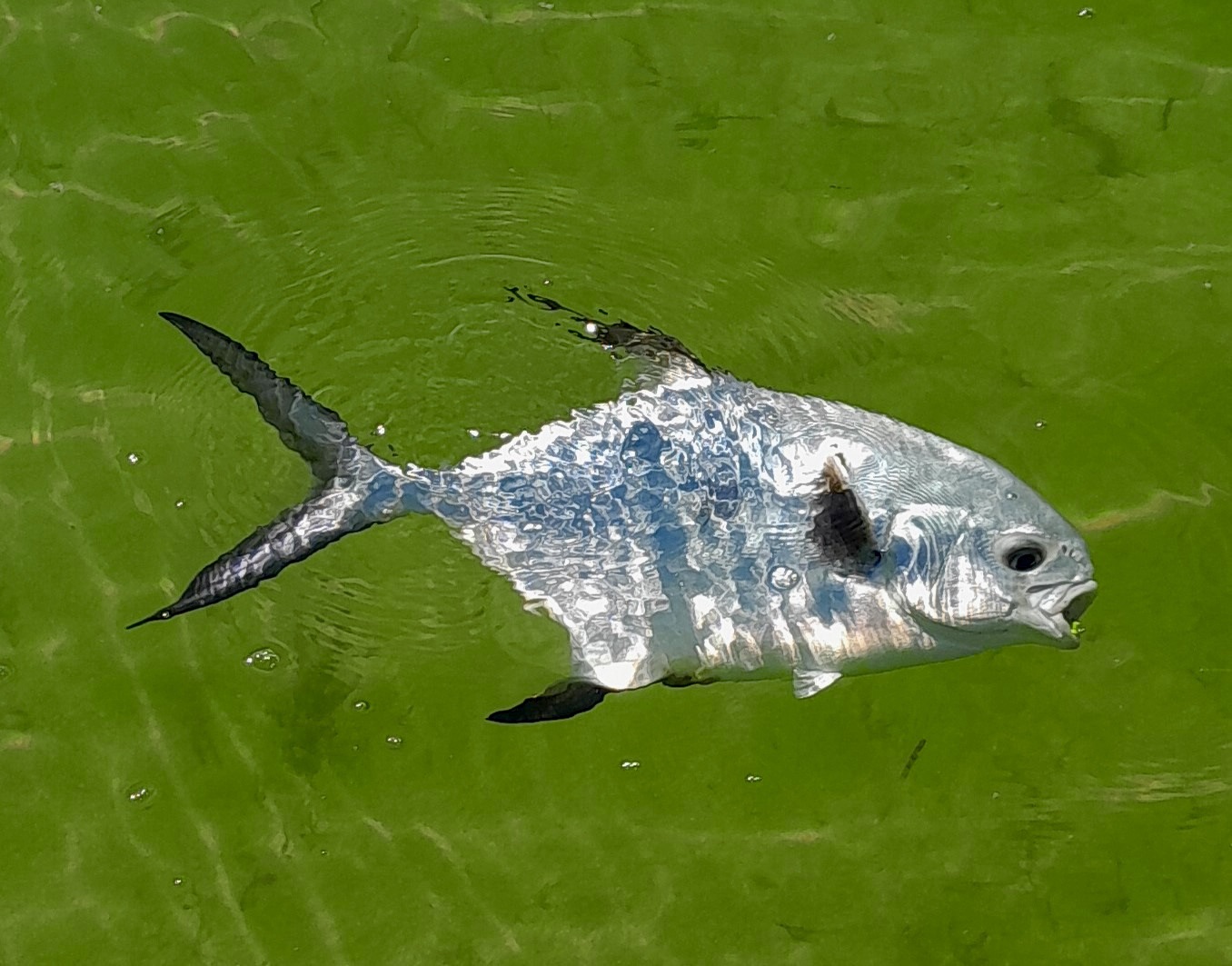
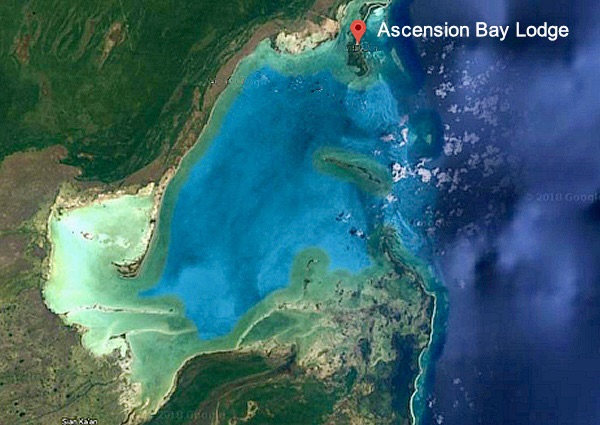
On November 8 last year my long-time fishing buddy James and I boarded a plane at Gatwick, bound for Cancun, and eventually to Ascension Bay Lodge, Punta Allen in Mexico, for a week of fishing the vast area of Ascension Bay, primarily for bonefish, permit, tarpon and snook. We had booked a hosted trip organised by Go Fishing Worldwide and we met up with our fellow anglers for the week at baggage reclaim in Cancun, after which we overnighted in Cancun before travelling on to the lodge together the following day. James and I had been on the same trip the previous year, our first tropical fishing trip, and were excited to return and build on what we’d learned.
fly fishing paradise
Arrival
Nine anglers arrived at the lodge in the early afternoon on the first day. Two of the guys from the previous week were staying on, so our party numbered eleven in total. After a couple of welcome drinks we were shown to our rooms and left to settle in and rig up tackle. The fishing week is from Sunday to Friday, with Saturday being the guides’ day off, but a couple of boats had been arranged to take us for an unguided wading session – a nice chance to loosen the casting arm before the fishing started in earnest.
The tide on the flat was a little too high for spotting tailing bonefish, so I spent the time continually moving and blind-casting a shrimp pattern fly. As I moved steadily along I spooked several small sharks – a common feature on these flats. I caught three baby barracuda, one bonefish and a little snapper. I also dropped a bonefish and cracked off on two more. Thinking about that afterwards, I realised that my tippet had probably been damaged by the little ‘Cuda’ and I should have checked it before re-casting. Lesson one.
Day One
Sunday morning and after a filling breakfast we gathered to be allocated our guides for the day. Fishing is usually based on two anglers sharing a boat in the company of two local guides.
James and I elected to spend day one fishing for bonefish – and hopefully to get a few fish under our belts and build some confidence for the coming days. The guides took us on a relatively short boat trip of maybe 20 minutes, into a very fishy looking area of mixed shoreline, open water and mangrove islands. The tide was dropping and conditions were ideal – fairly calm with good sunshine, so James and I were able to see most of the fish we were to cast at. (That’s not always the case and sometimes it’s necessary to rely on the guide’s instructions for casting direction and distance).
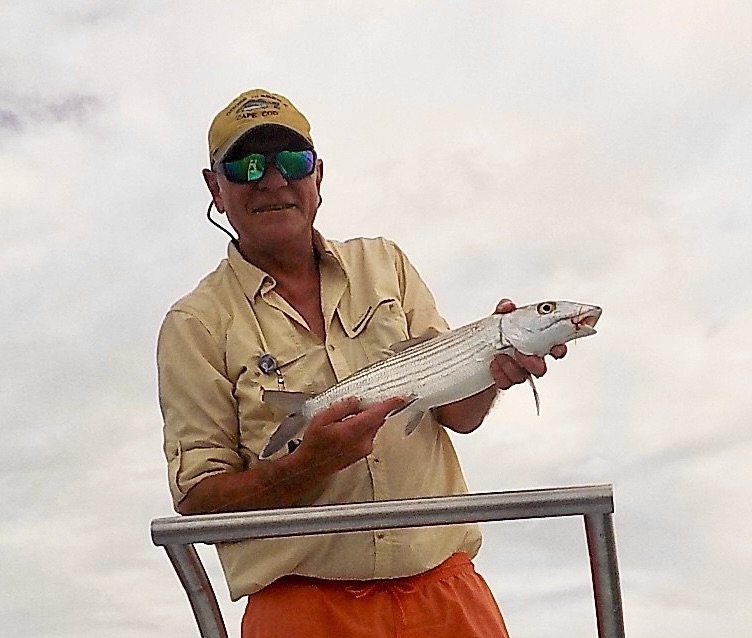
We were both fishing from the boat and, as only one angler can fish from the casting deck we agreed a regime of swapping over after 20 minutes or after a fish is caught. We enjoyed a splendid morning and shared a catch of a couple of dozen bonefish ranging from about a pound to four pounds plus. It was highly absorbing visual fishing, with the fish running hard in mere inches of water and the bigger ones stripping plenty of backing. When we stopped for lunch the tide was at its lowest and as we relaxed on the boat there were tailing bonefish to be seen in all directions.
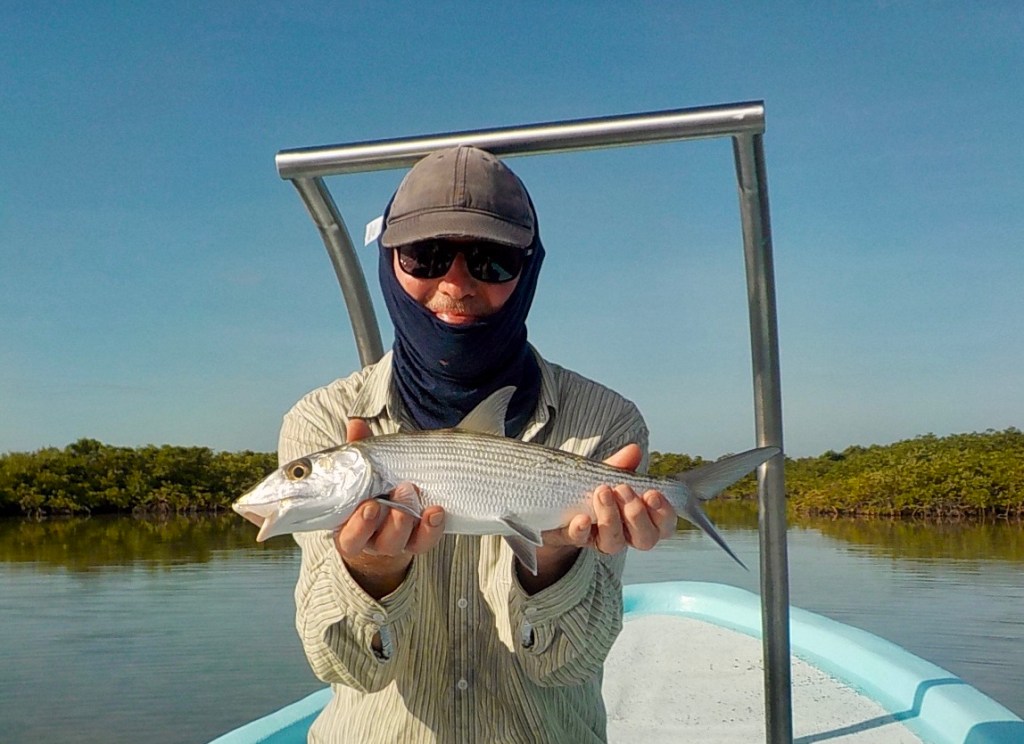
What a difference a tide makes. After lunch the tide had turned and tailing fish were nowhere to be seen. As the tide steadily rose, we encountered increasingly fewer fish and after adding a one or two more each to the tally, we left the area and spent the last of the day drifting the shoreline near the lodge, looking for permit, but without further success. On arrival back at the lodge at four o’clock – uncannily, all the boats materialise within minutes, or even seconds of each other – we learned that two of the group had caught permit – one of five or six pounds and the other a pound or two larger. A permit is always cause for congratulation and the lucky captors get to head the table at dinner and enjoy a nice glass of quality Tequila.
Day Two
James and I fished together again on the second day. We’d agreed on a change of quarry and asked our guide, Rafa, to take us to fish for tarpon and snook. Once again we both fished from the boat, alternating position on the casting deck. We started with a long drift along a shoreline studded with washed up dead trees and mangrove clumps. This looked like prime snook territory, but apart from a couple of bonefish we saw no fish, so a change of scene saw us negotiating a “canal” into an area of mangrove islands and channels.
Almost immediately the guides spotted a few rolling tarpon in the open water, but they kept their distance from the boat and we didn’t get a good cast at them. Ten minutes later we were poling gently around a decent-sized mangrove island when the instruction came from the guide for James to make a cast. James hadn’t seen the fish and the cast didn’t hook up, but that was the start of an hour and a half of pretty constant activity, with numerous tarpon and snook showing themselves (at least to the laser-eyed guides, if not always to us mere anglers) just inside the mangrove fringe.
I have to be honest and admit that James and I were not quite precise with our casting. This fishing happens at fairly short range and the ability to drop the large fly into a foot-wide gap in the mangroves is key to success. Lesson two – practice your mangrove casting!
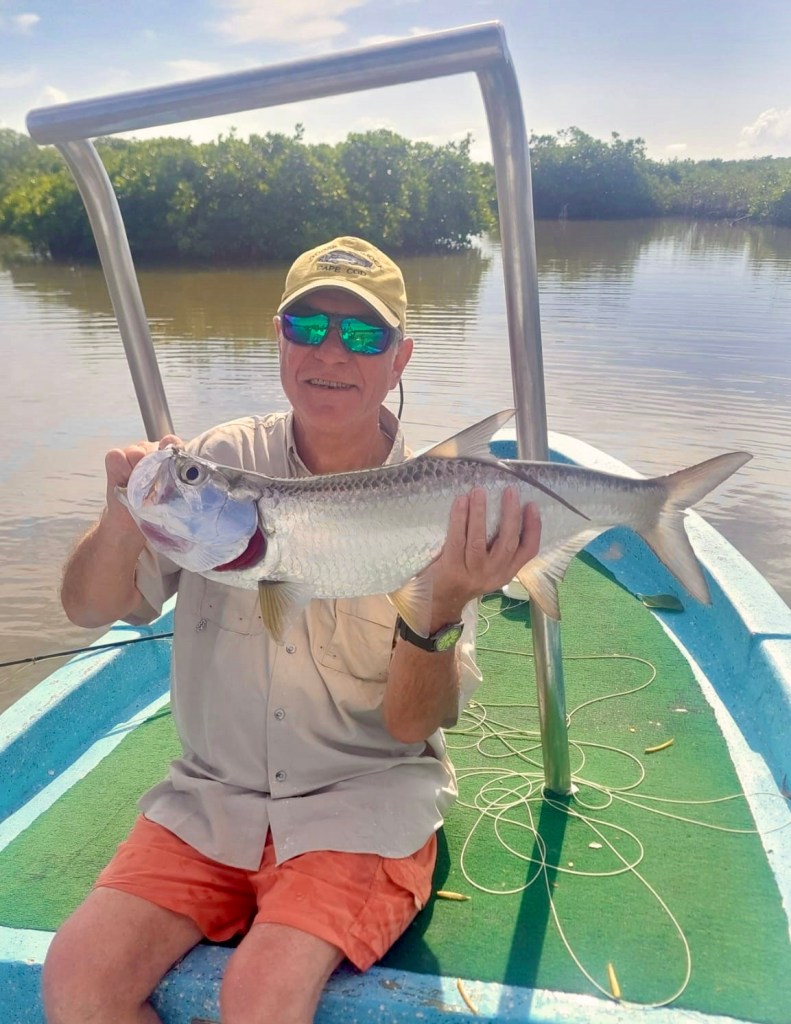
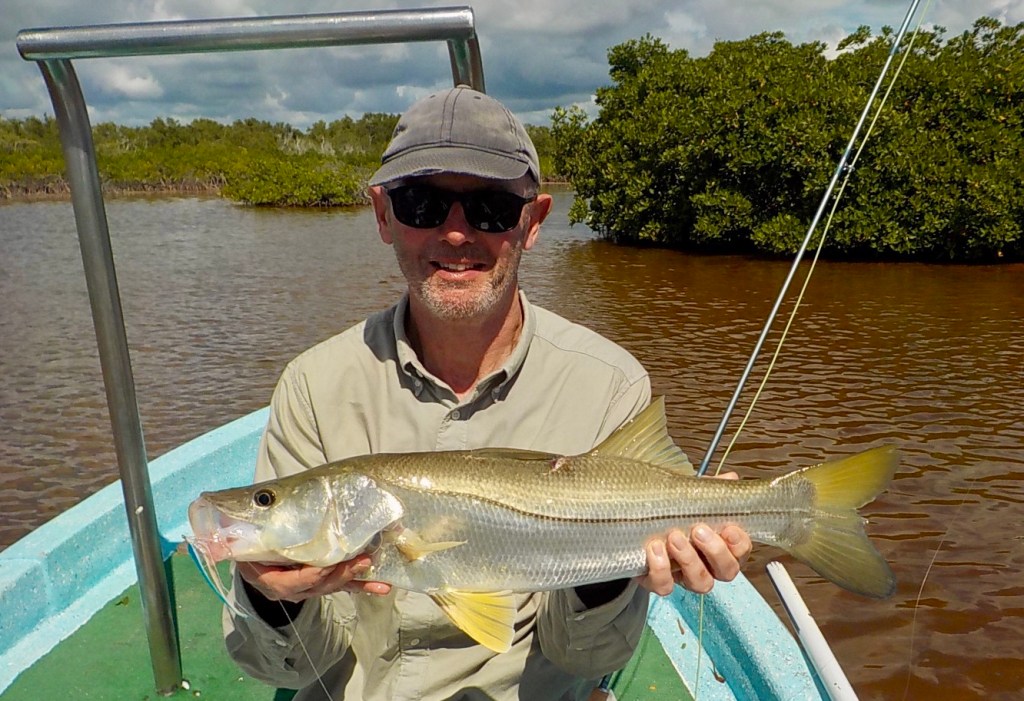
However, we got things right often enough to catch some fish, with a brace of chunky snook (his first) for James and a couple of “baby” tarpon and a snook for me. The tarpon were the first ones I’d landed, having dropped a couple last year, so we were a pair of happy anglers. After a quick lunch on the boat, we left the scene of our success and prospected further through the mangrove channels for some time, with a few awkward chances at moving tarpon, but no more hook-ups.
By now the tide was rising, giving the fish more access deeper into the mangroves, so we headed back out for another drift along the open beach where we’d started the day. Again, apart from a couple of bonefish, we didn’t spot anything to cast at, so had a change of location and spent the last hour prospecting for permit along the beach close to the lodge. We saw a couple of large single permit, but they were travelling briskly and we didn’t get a shot.
Day Three
On the Tuesday I paired up with the Scotsman, Stuart, who was one of the lucky anglers who had caught a permit on day one and was understandably keen to try for another.
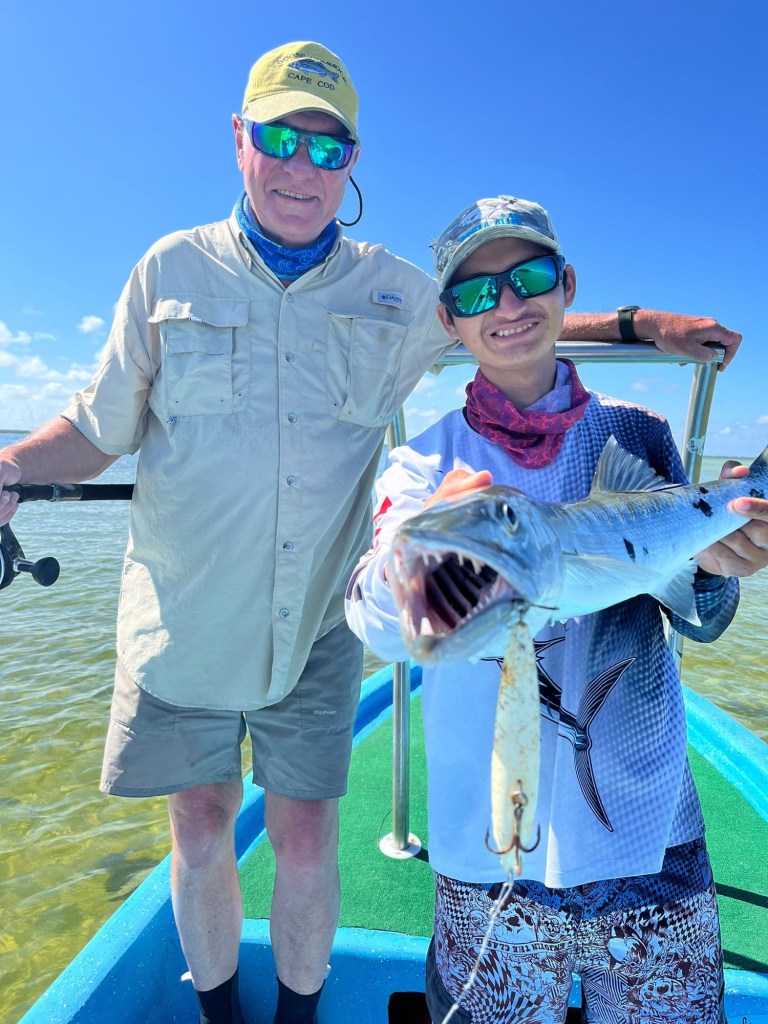
After a 45 minute run in the boat we began the day’s fishing plundering a large shoal of bonefish on a big flat close to a row of small islands. The bones were mostly quite small, but the occasional larger one added some spice. I think we caught a dozen or so each in pretty short order which was great fun. While I was on bonefish duty, the guides spotted a decent-sized barracuda and I was passed a spinning outfit rigged with a big floating plug and wire trace and told to cast past the ‘Cuda’ and wind like crazy! I did as instructed and the ‘Cuda’ hit the plug like lightning and had the well-tightened reel clutch zizzing nicely. Once that fish was boated, another was already in the guides’ sights, so I was able to repeat the process and bag another.
The rest of the day was spent searching for and casting to permit. There were at least two schools of permit on the flat we were fishing and in the flat-calm conditions it was fairly easy to see where the fish were. Occasionally a black sickle fin, or maybe half a dozen, would slice through the water surface and a couple of times I saw half a large permit come clear out of the water – a remarkable sight. This all added to the excitement and atmosphere of the fishing.
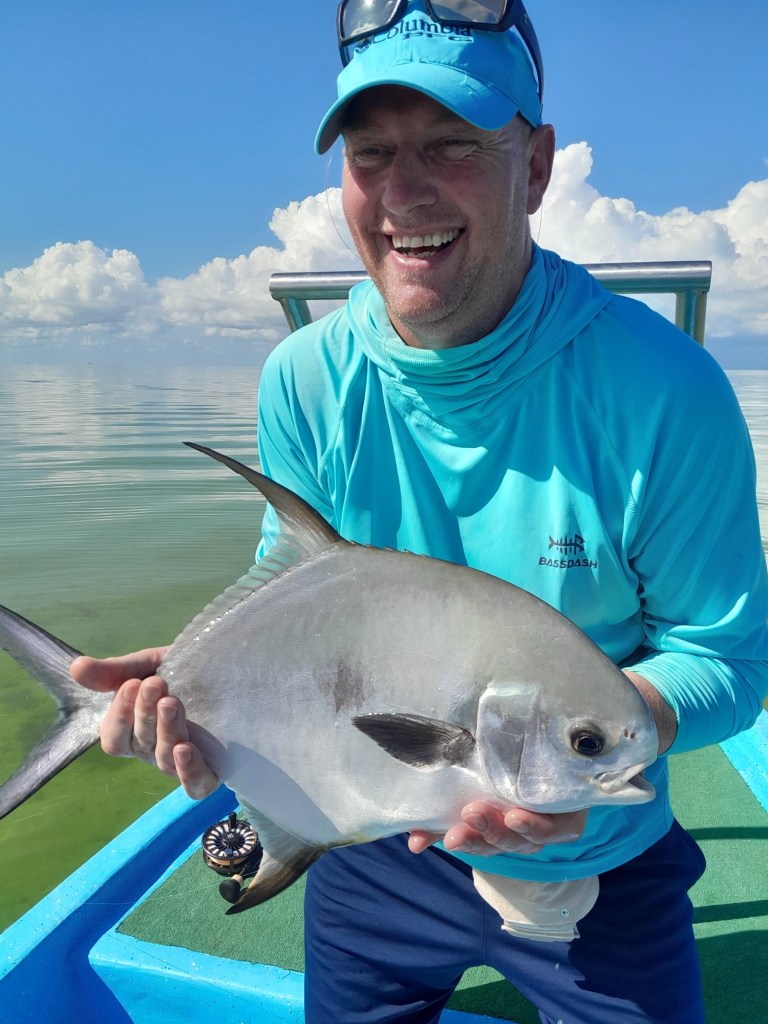
Our guide, Oscar, worked hard to repeatedly position the boat to give Stuart and I a favourable casting chance and we did both have several shots at the schools of permit, resulting in fish following the fly but not taking, or swirling away at the last second. Eventually, Stuart did connect with one and boated his second permit of the week – a nice fish of perhaps six or seven pounds, caught on a crab pattern. This had been my first session dedicated specifically to permit and I learned a lot in a short time – although the secret of how to actually hook one of the fickle beasts evaded me!
Day Four
The next morning saw me and another member of the group, Dave, on another long boat run with our new guide Chime, to prospect a different area for permit. Eventually we stopped on an extensive flat and as the boat settled we could quickly see two different schools of permit, subtly disturbing the water surface as they moved. Dave beckoned me to take the first stint and as I was sorting out my rod, Chime spotted a single permit about 80 yards away, heading for us. He slid into the thigh-deep water, took my rod and was stripping line from the reel for me as I followed. We got into position to intercept the fish, which luckily stayed on track. My cast was good and the permit ate my fly. First cast of the day and one very happy angler held on as 150 yards of fly line and backing disappeared from the reel! 15 minutes later Chime tailed my first proper permit (I had caught a baby the previous year) and I was enjoying the sensation of one of the highlights of 61 years as an angler.
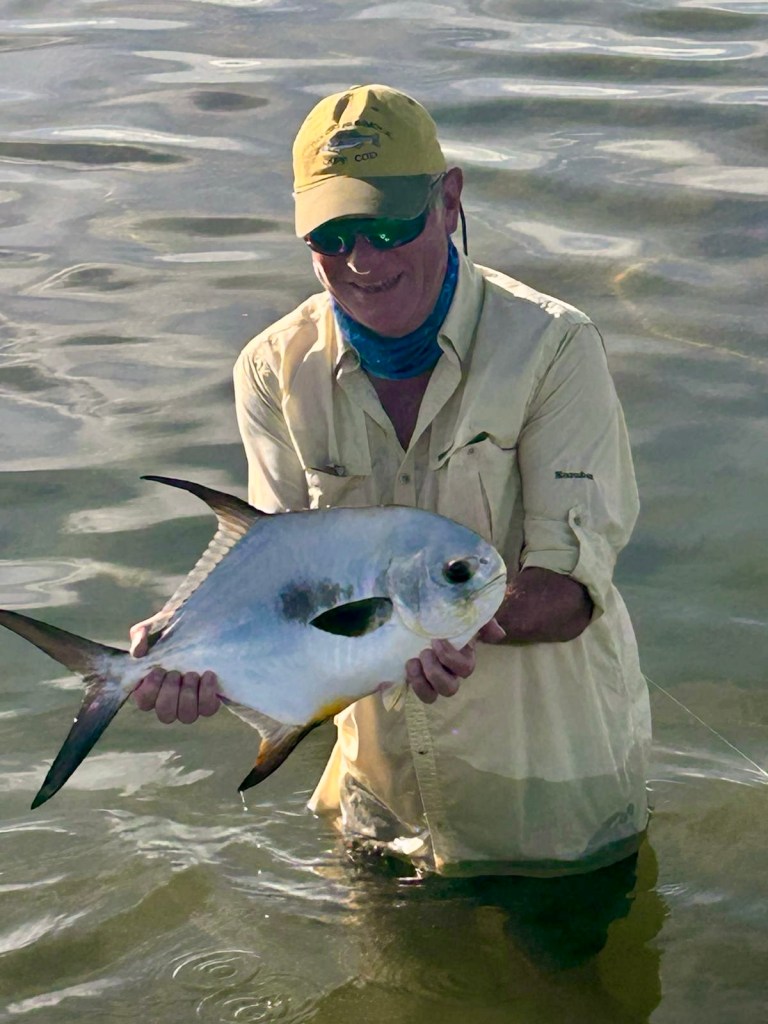
Dave had a few decent shots at the schools of fish we’d seen, but unfortunately didn’t connect.
In Dave’s words – the stars lined up for me that morning. We made a move and our guides spotted a few tarpon on a mangrove island edge. Dave had a few chances at the tarpon and a large snook there, but they ignored his flies. He did catch a couple of Cubera snapper – the first I’d seen.
I only made three or four more casts that day – I was hoping Dave would catch a permit so we could try for a grand slam, but it wasn’t to be and we finished the day without further success.
Days Five & Six
James and I paired up again for our last two days’ fishing. We elected to chase bonefish on the Thursday which, with hindsight, might have not been the best idea in the conditions we encountered. The tides were building towards springs and there was noticeably more depth of water than at the start of the week, which meant that the fish were able to move off the flats and into the mangroves. We saw few fish, suggesting they had indeed taken the opportunity to feed amongst the mangroves and we did see mangrove twigs twitching way back as fish moved through the flooded vegetation.
We had a few casts at singles and pairs of bonefish – I caught a brace but James was fishless. We did encounter a good sized permit tailing along the mangrove edge in very shallow water. It moved slowly out onto the open flat and James had a fair shot at it, but there were also four sharks in the area that seemed to disturb the permit, which moved off and didn’t stop. Late in the day we moved through some extensive mangrove tunnels and came out into a lagoon where a number of the local boats were moored. There were a few tarpon in the lagoon, identifiable as they rolled at the surface, but they were quite mobile and showed no interest in our flies.
The weather forecast for Friday, our final day’s fishing, was not promising, with heavy rain and mounting wind predicted from about midday. James and I simply asked the guides to find us whatever fish they thought best to target. Marcos poled us along a lovely shallow flat adjacent to a long beach. Despite the promising-looking water we saw few fish. James hooked up but lost a bonefish and I caught a brace and dropped two others. Just as it started to rain lightly we saw a permit bow-waving our way and I had a long shot at it, but the cast went just behind the fish and the chance was gone. Then the heavens opened and thunder rumbled around. With visibility down to about twenty yards, we sat it out for half an hour until the rain relented enough for the guides to see where we’re going and after a brief conflab we agreed to return to the lodge to eat lunch in the dry.
The other boats had all had the same thought and before long, the whole crew was back at the lodge drying out and our week’s fishing was done.
Despite a couple of tricky days when we didn’t meet many fish, James and I thoroughly enjoyed the week and I’m glad to have returned to build on everything we’d learned on our first trip the previous year. A month later and the permit is still swimming through my dreams!
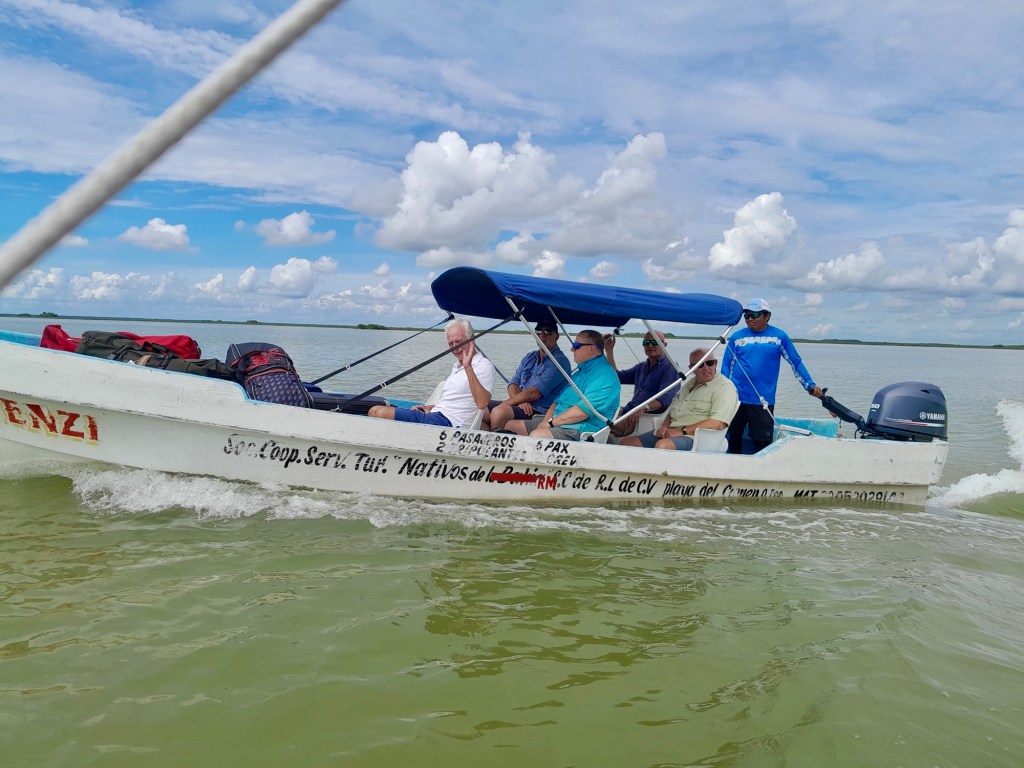
There are a number of angling lodges based at Punta Allen and travel/accommodation/fishing packages are available through a number of UK-based specialist angling holiday operators including Go Fishing Worldwide – https://www.gofishingworldwide.co.uk/
Ascension Bay Lodge can cater for up to twelve anglers sharing twin rooms. The accommodation is clean and comfortable, the food is of excellent quality and great quantity and the bar is well-stocked. American owner, Daniel, is welcoming, knowledgeable and runs an excellent operation.
More details here – https://ascensionbaylodge.com/
The Ascension Bay experience is, of course, about more than the fishing and with the tropical climate, it’s a great place to visit as the British winter sets in. Expect to see frigate birds, ibis, egrets, several kinds of heron, terns and kingfishers, osprey, vultures and keep your eyes open for flamingos, spoonbills, turtles, dolphin, eagle rays, crocodiles, sharks and more.
 Fighting For Fishing
I love reading those tales, especially of permit. It’s so crazy that on flats they are so, so tricky – in fact I’ve only had them on crab fishing that way but when they’re on reef or wreck they eat anything. I had seven on fly in one morning over the at Western Dry Rocks out from Key West, with the best a gnat’s thingy off 20lb. I’ve had them to 33.4 on bait and that’s a proper war! The last bonefish I caught was on a sabiki rig fishing for blue runners 😁😁.
Tight lines for your next adventure.
Glad you liked Nick’s tale. This blog is always open for your stories too!
Lovely to hear from Nick again. Top man.