It wasn’t until the middle of November that we had our first frost in these parts, after the hottest and driest summer seen in England since the heatwave of 1976. Our rivers until recently were on their bones; so much so that I’ve only been barbel fishing four times this season. In order to get a bend in my rod I carried on tench fishing throughout August and even had a session in September. In any normal year I rarely target tench much after the middle of July, save for an annual excursion to a particularly beautiful and productive Capability Brown estate lake in deepest Sussex – a place where they can be caught in numbers all summer long on the float next to the marginal lily pads.
Fishing will always be a weather dependent activity, and the beauty of being an all-round angler is the ability to pick and method or a species best suited to the conditions that confront us. A normal year would normally see me taking a ‘gardening break’ from March 14th until the end of April, when the nighttime temperatures have risen enough to trigger the tench and crucians to start feeding with enthusiasm. Although it eventually turned into a heatwave and then a drought, 2025 started with flooded rivers and an unseasonably cold spring. The tench fishing on my local Reading & District AA pits was patchy to say the least although a few fine fish came out to local specialists including to my good friend Andy Dodd. I’ve had some fantastic tench from the Reading pits over the years including a personal best of 11.02 but I’ve felt for some time in need of a new challenge.
Cotswold Tenching
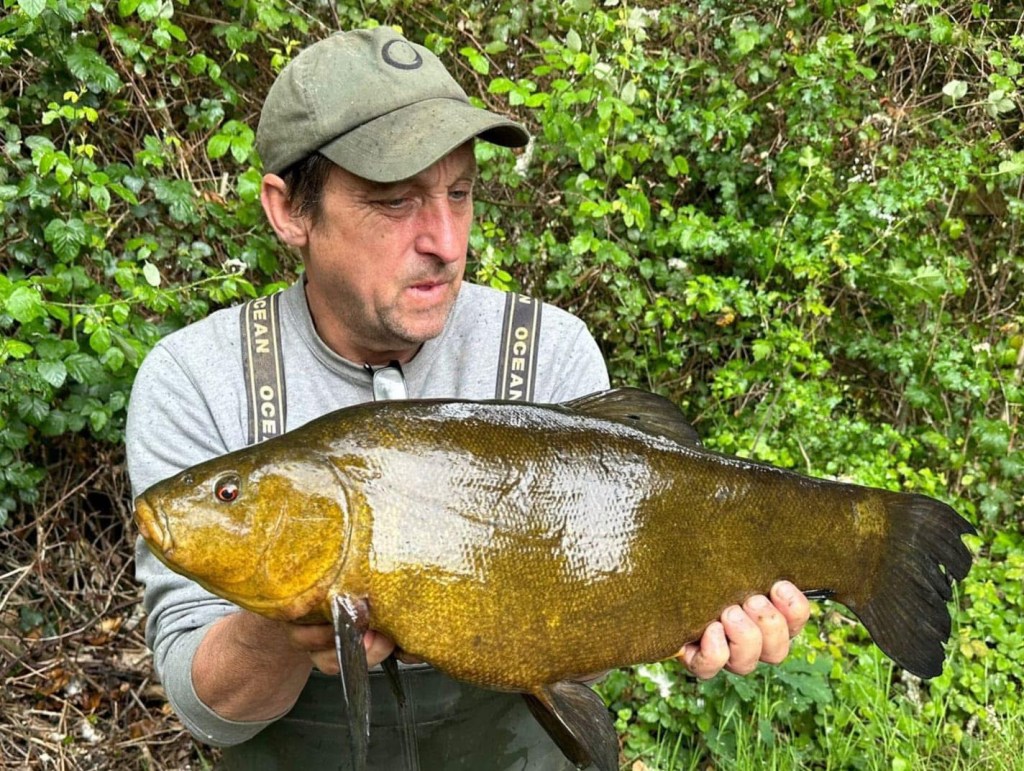
The next nearest complex of gravel pits holding tench of the size I was after is the Cotswold Water Park, a 50-minute drive from my home in Reading. This massive collection of lakes contains some real jewels, including the fabulous Netherwood fishery which I book each year for my birthday fish-in with friends. The main angling club on the Water Park is South Cerney AC who have some fabulous waters – and more to the point, some exchange tickets with my own club which I decided to utilise in search of new tench challenges. I first got to know some of the good folk at South Cerney some 20 years ago, when I was advocating for fishing in Parliament. They used to invite me down to their impressive clubhouse on the banks of Ham Pool to present the prizes at an annual angling festival catering for kids with disabilities. While I liked the look of Ham Pool, I was fixated at the time on the much larger Bradley’s Pit just across the way. This massive sheet of water gave me some cracking tench to 9.05 and later became renowned for some impressive catches of huge roach. Sadly, Bradley’s became a ‘circuit water’ and with the reduction in available bank space due to a local housing development I no longer wanted to fish there. Which is why I was all ears when my good friend and South Cerney fisheries manager Dan Garner suggested I give Ham Pool a try. Even more so when he sent me a picture of a rather large tench caught the season before by one of his members!
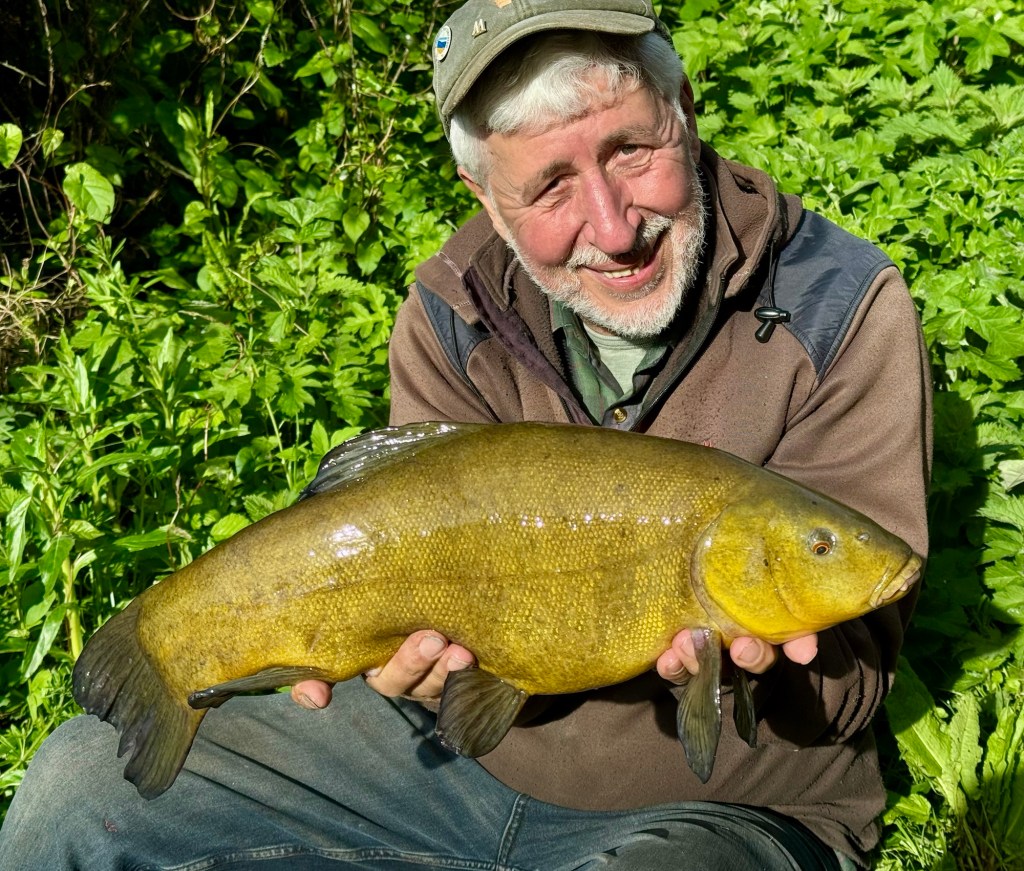
Gravel pit tench fishing these days tends to mimic scaled down carp fishing with rod pods, buzzers and short, heavy, self-hooking rigs. Study any underwater video of tench feeding and you will immediately see why these set ups are so successful. Tench love particle baits and they love grubbing for them on the bottom, sucking in mouthfuls of silt, gravel and detritus before ejecting what they don’t want and swallowing what they do. A small bait on a long hooklink is likely to be picked up and spat out several times without the angler seeing any indication of a bite. However, a bunch of maggots, casters or a couple of worm segments hair-rigged on a four-inch hooklink close to a heavy feeder is far more likely to result in powerful ‘one toner’ as the tench pricks itself on the exposed hook and charges off for the nearest weed bed.
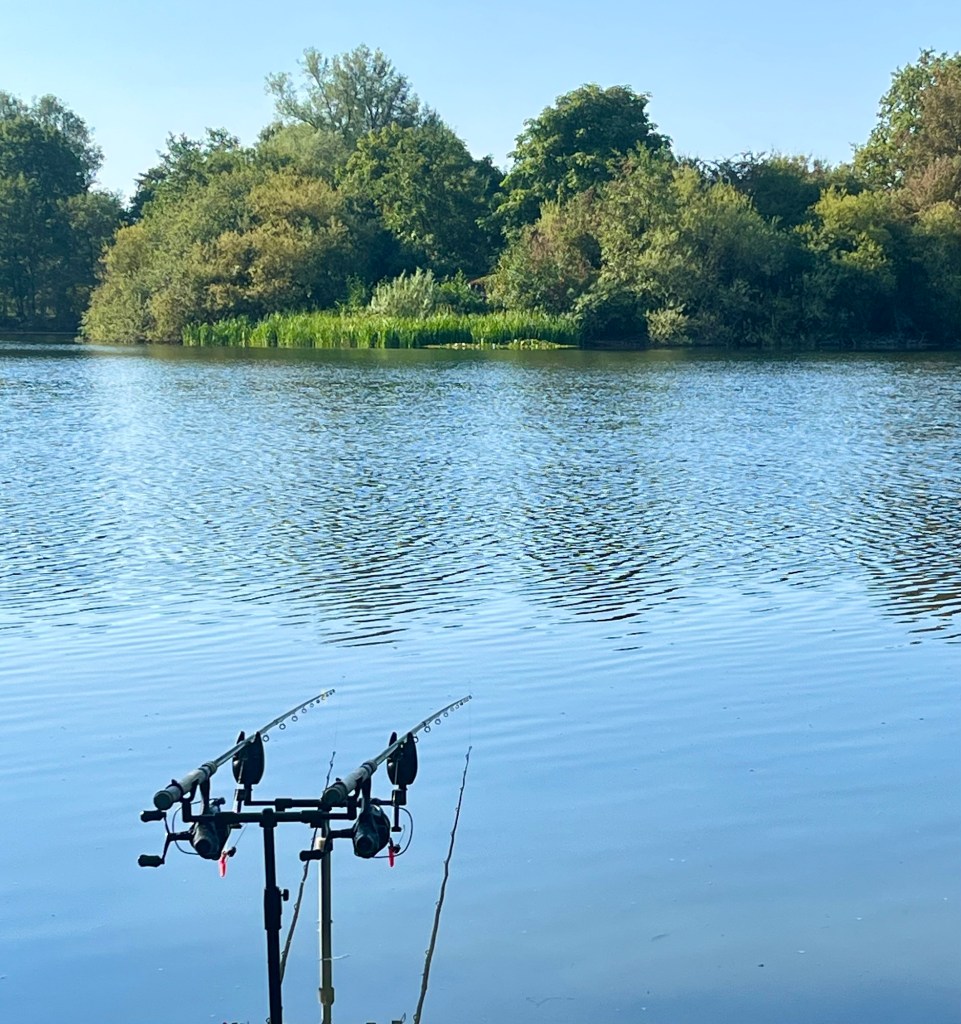
I reckon about 75% of the tench I catch each year come to this method, including nearly everything I get over eight pounds. So much as I adore float fishing in the margins and watching that bright red tip tremble, lift and then slide away, I’m still spending the bulk of my time staring at the arse end of two rods on buzzers. But luckily there are a few waters I know where both methods can be combined – and South Cerney’s Ham Pool is one of them. With a deep drop-off just a rod length out from the bank it’s perfect spot to place a bait at the bottom of the marginal shelf. As long as the resident perch were not being too much of a nuisance, three or four maggots or a worm and maggot combo on a strong size 14 hook, laid a few inches over depth on a bed of groundbait, casters and dead maggots, usually resulted in a tench or two. The second, or even third rod would be cast anything from 30 to 40 yards out to a spot primed in the usual way with a spomb and plenty of particles. While never threatening any records, Ham Pool gave me and my fishing mate Paul a steady run of fish to around seven pounds on both float and feeder setups. However, as the small perch and roach became more active, we had to ditch the float rods and switch to either wafters on a small method feeder or plastic maggots. Both worked to an extent but we were keen to try elsewhere.
Rudd Diversions
Just up the road was a slightly smaller, shallower and altogether weedier pit with a reputation for producing quality rudd as well as some good tench fishing. I soon learnt that the fish in this lake were highly mobile, so location was key. But having fish in front of you was only half the battle. The prolific weed growth meant that finding somewhere clear enough to present your bait effectively could be challenging to say the least – particularly as the lack of depth close in meant that you usually needed to fish some way out from the bank, well beyond raking distance.
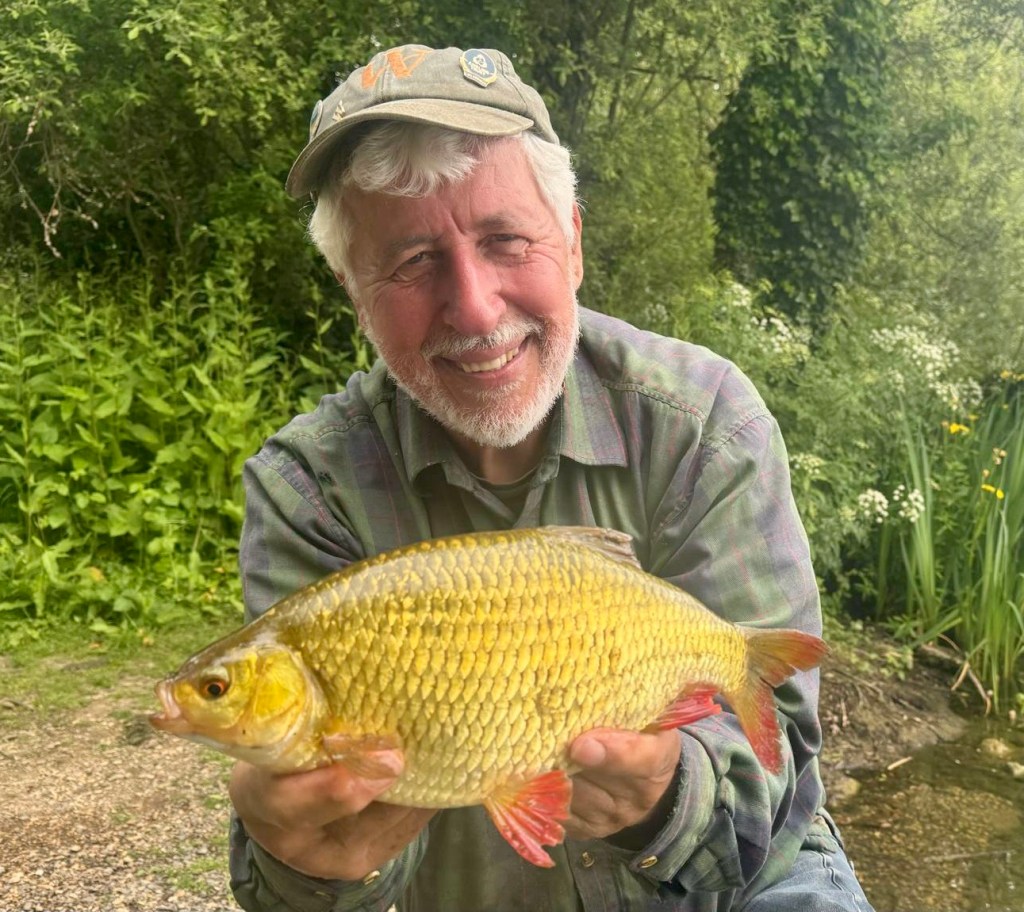
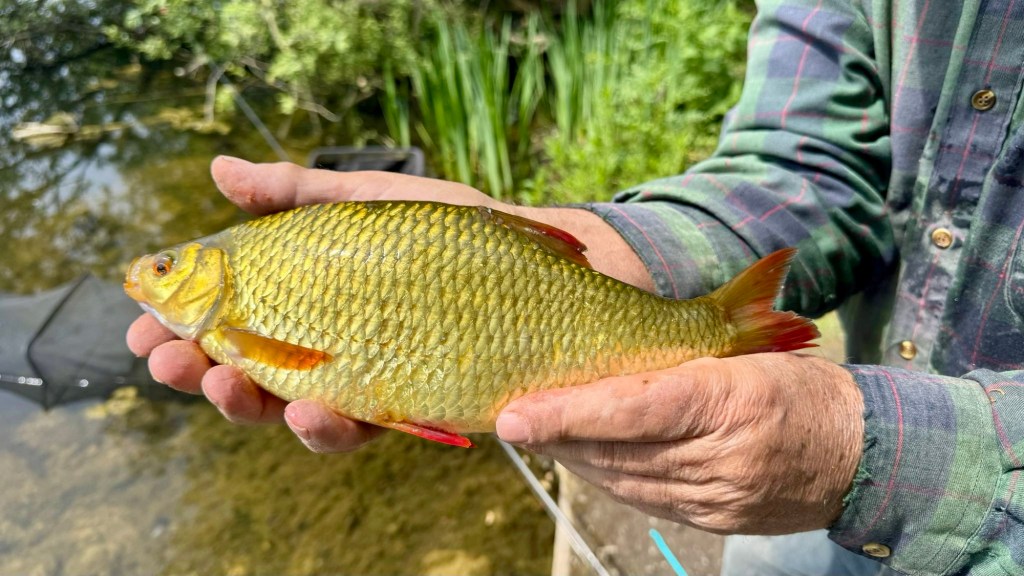
We started off fishing maggot feeders on short hooklinks and were getting pestered by smallish rudd, so quickly switched over to plastics. This resulted a few nice tench but nothing spectacular. I then saw a picture of fabulous mixed bag of both rudd and tench from very close to where I had been fishing, which made me think that both species could be targeted in the same session and that a change of tactics was required. In the end I opted for spombing out a sloppy mix of groundbait and liquidised corn to create a cloud at mid-water together with plenty of red maggots. The buzzers were replaced with a matchman’s quiver tip set up with a couple of maggots on a size 14 on a 30-inch hooklink behind a blockend feeder loaded with more maggots. Constant feeding with both spomb and feeder would hold the rudd in the swim, with the bigger specimens pushing the smaller nuisance fish out of the way. The trick was to keep busy so there was a constant flow of bait through the water column.
The hooklink length was critical. Too short and it bombed through the rudd; too long and the small fish got to it first. But get it right and the fishing was outstanding. On one particular session I never put the rod in the rest. It was just a case of cast, tighten up as the feeder sank through the hungry shoal and then strike as the tip twitched. Rudd after rudd from 12ozs to 2lbs came to the net, giving me my best ever catch of the species – as you can see from this release clip below. And the icing on the cake came in the form of half a dozen tench which took the bait when I had allowed the feeder to settle underneath the rudd for a few minutes. The bites from these were altogether more violent! I let the tench go straightaway after capture as I don’t like putting anything in with the rudd that might damage these stunning fish.
https://share.icloud.com/photos/01751zWGaz2zuadUIJCD2aX5w
As the drought took hold, the water levels began to shrink alarmingly on the rudd lake and so it was time to look elsewhere. The joy of being on the myriad lakes that make up the Cotswold Water Park is that ‘elsewhere’ is never very far away. Now while this area has a justified reputation for some quality tench fishing it tends not to produce many double figure specimens. The upper limit on most of the waters seems to be around nine and half pounds, which is certainly nothing to be sniffed at. But if I was to improve on my tench PB I really did need to find somewhere that held genuine 12-pounders; and as luck would have it, I was offered a ticket to one such gem.
The New Pit
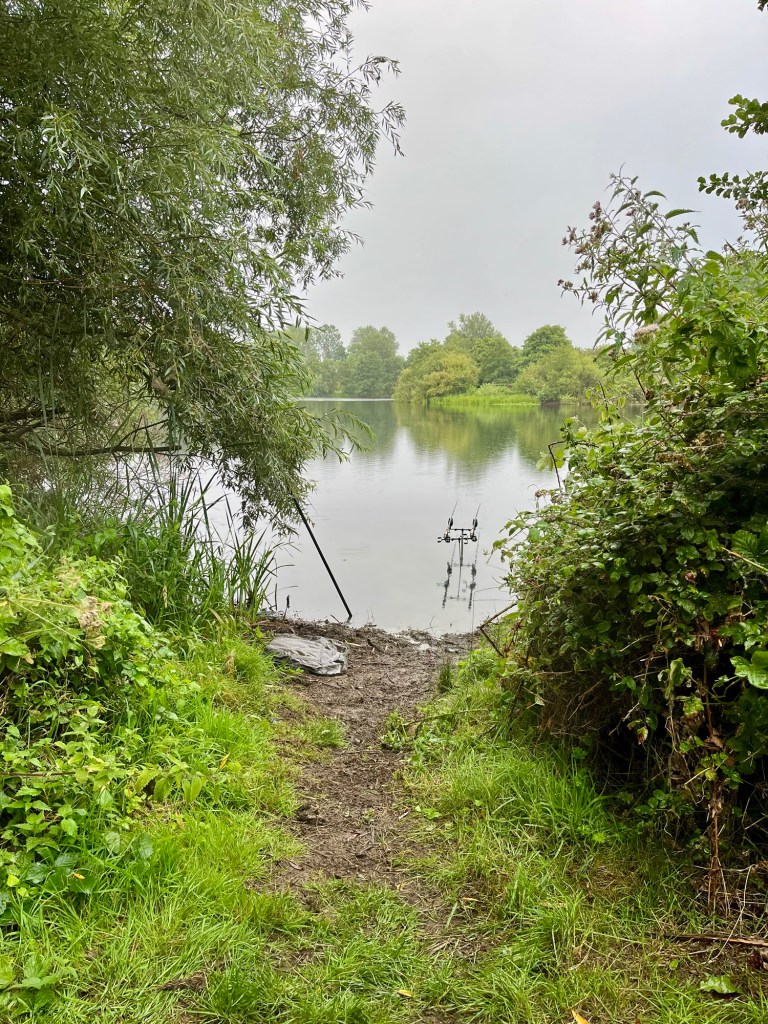
The new pit was once popular with carpers, but regular visits from Mr Otter had thinned out the carp stocks and with it the carp anglers. The tench on the other hand seemed to be more adept at avoiding the predators, much like chub in rivers compared to barbel. Consequently I was faced with that rarest of prospects – a healthy and productive gravel pit with a declining stock of carp but with good numbers tench that have been largely ignored. The excellent sport earlier in the year on the club waters meant that I didn’t get around to visiting the new pit until mid-July. The weed was well established but a chance encounter with a helpful carper pointed me towards a couple of promising spots. A quick lead around showed a weed-free bar at a comfortable eight wraps in swim number one and a nice clear area at 11 wraps in the second swim 100 yards further up the same bank. Neither spot seemed to have been fished much despite it being comparatively late in the season.
My first session was a sign of things to come. Although most of my tench trips are morning-only affairs, this time I decided to bivvy up as it was a new water and I wanted to get a feel for the place. Evening time can be worth a bite or two in my experience but it’s better for fish spotting as the tench do seem to like to show themselves by rolling over in favoured areas before returning for breakfast the following day. As it happened my first indication was a screaming buzzer as tench number one took a liking to my worm kebab. Another soon followed before the light faded and the swim went quiet. I topped up with a mixture of hemp, 4mm pellets and dead maggots plus some dark fishmeal groundbait heavily laced with hemp oil to pull any mid-water cruisers down onto the spots. Then it was time for bed as I’ve no interest in trying to catch tench at night. It’s rarely productive and the dark hours are more likely to result in a great fat carp which was the last thing I wanted. Besides which, I firmly believe that even if you do sacrifice a night’s sleep for a couple of tench what’s to say that you wouldn’t have caught the self-same fish a few hours later in much more enjoyable circumstances?
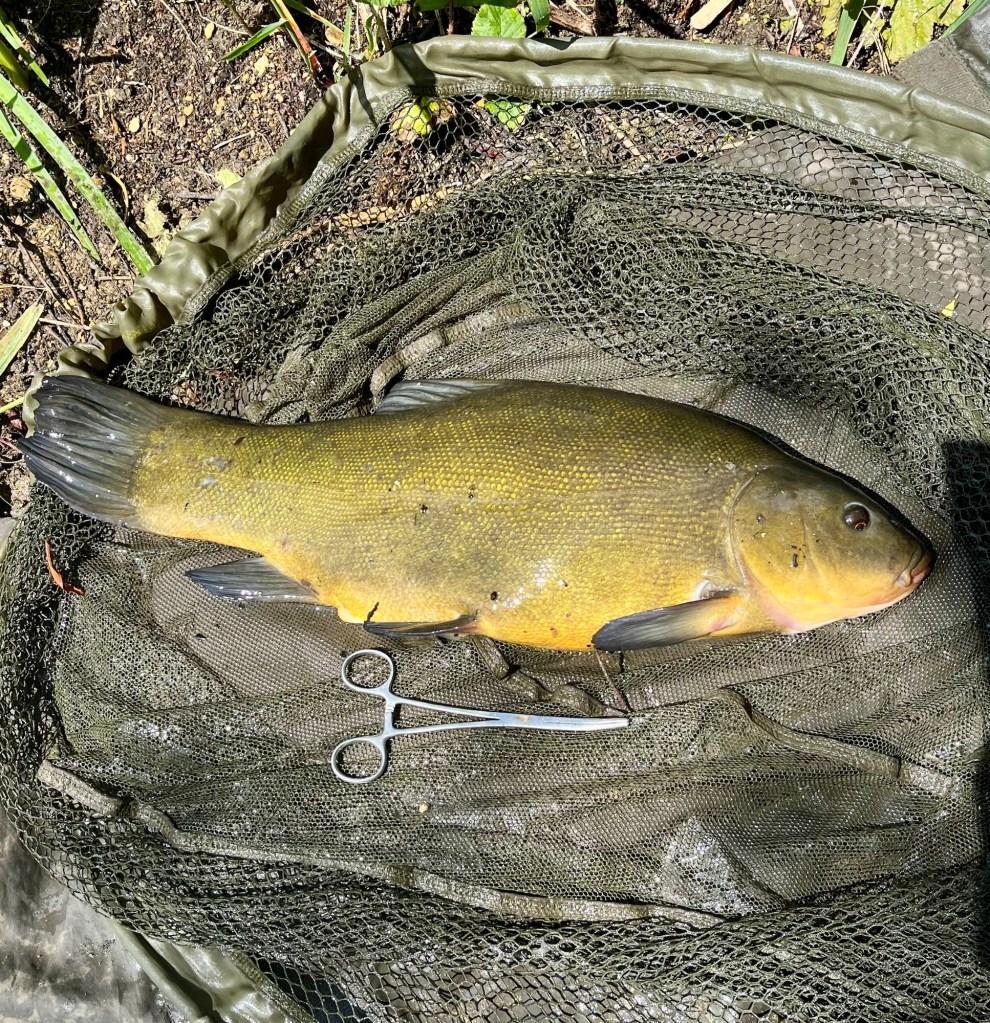
Now anyone who fishes these tricky gravel pits will confirm that a couple of fish per morning, interspersed with the occasional blank, is about par for the course. Four tench would be a good haul and anything over six is approaching red letter day territory. So when another ten fish came my way the next morning I could scarcely believe my good fortune. The crayfish had turned up halfway through the session, meaning that I had to retire the worm rig. But with a method feeder and wafter on one rod and plastic maggots behind an inline feeder on the other I was able to keep the fish coming and the lobsters away. Subsequent trips were only slightly less productive and each time I enjoyed multiple catches of tench until the weed growth just made fishing unfeasible. The strange thing was that 80% of the fish were the smaller males, meaning that I came nowhere near my target of another double-figure tench. But hey ho, there’s always next season and this time I shall be there right from the start. I’m feeling both excited and optimistic about the fishing to come. You’ve got to love a sport that can still engender the same childlike enthusiasm after nearly 60 years – a sport that first got me hooked as a teenager in a pit on the edge of London, now swallowed up by the M25.
Barbel Battles
Painfully low rivers and heatwaves meant that my barbel fishing in 2025 was minimal by normal standards. Usually, I’ve booked in a couple of Wye trips and half a dozen more to the Trent from late June to November to get my required barbel fix. These are then supplemented with visits to the Hampshire Avon which, although less productive, usually throw up a fish or two. As it turned out my barbel rods only had four outings this year, comprising three Trent trips for a couple of days and a single-day excursion to the Wye at Ross.
I’m pleased to say that all were successful, with two ten-pounders being the highlight from the first two Trent visits in catches of up to nine fish per session. It really is wonderful fishing up there if you know where to go and use the right tactics. With the water low it was clear that the fish would be holed up in the snags and would need drawing out. With sackfuls of pellets being tipped into the river every season the barbel have become well accustomed to this source of free food. These days they respond quickly to the sound of loose fed pellets and with far less caution than the splosh of a bloody great swimfeeder. So half an hour feeding the swim by catapult with five or six 10 mm pellets every 30 seconds is often all it takes to get the barbel lined up somewhere close to a catchable spot. If the snag is beyond catapult range for hempseed I’ll deploy a medium sized spomb to quietly deposit a pint or more of seed in the area. All things being equal we are then ready to go. With plenty of grub in the swim big swimfeeders are not only unnecessary but are also a positive hazard to wary fish in clear, low water. The 40 or 50g Kamasan black cap blockends are all that’s required, with a long tail of fluorocarbon to a size 12 hook and a single banded pellet on a hair. I’ve lost count of the number of times that this set up has caught me fish when those on cruder outfits have continued to struggle.
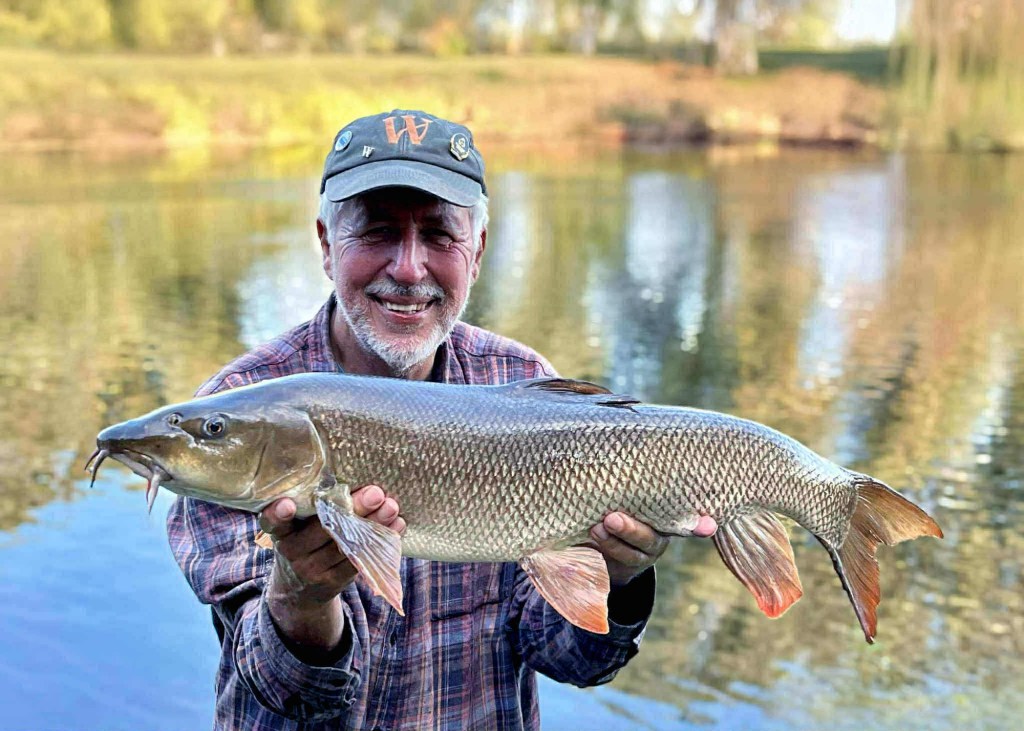
As the Wye was on its bones all summer long I didn’t venture west until the November rains had resulted in the first flood of the year. Paul and I were probably there a day too late, as the river had lost some of its earlier colour. Nevertheless it looked promising and eventually produced a brace of modest barbel for me late in a day in which I had been pestered by a shoal of very average chub.
My final trip of the year to the Trent coincided with a work engagement in Newark the night before in the company of Angling Trust boss Jamie Cook, at the excellent Nottingham Piscatorial Society’s Speaker Evening. If there’s another angling society capable of attracting 300 people to an evening event I’d be most surprised. Highlight of the night was a slide show and talk by Dai Gribble, whose best fish list includes the record roach and some truly incredible tench captures along with huge fish of almost every other species. Dai is an Angling Trust ambassador and a thoroughly nice bloke who I always enjoy meeting.
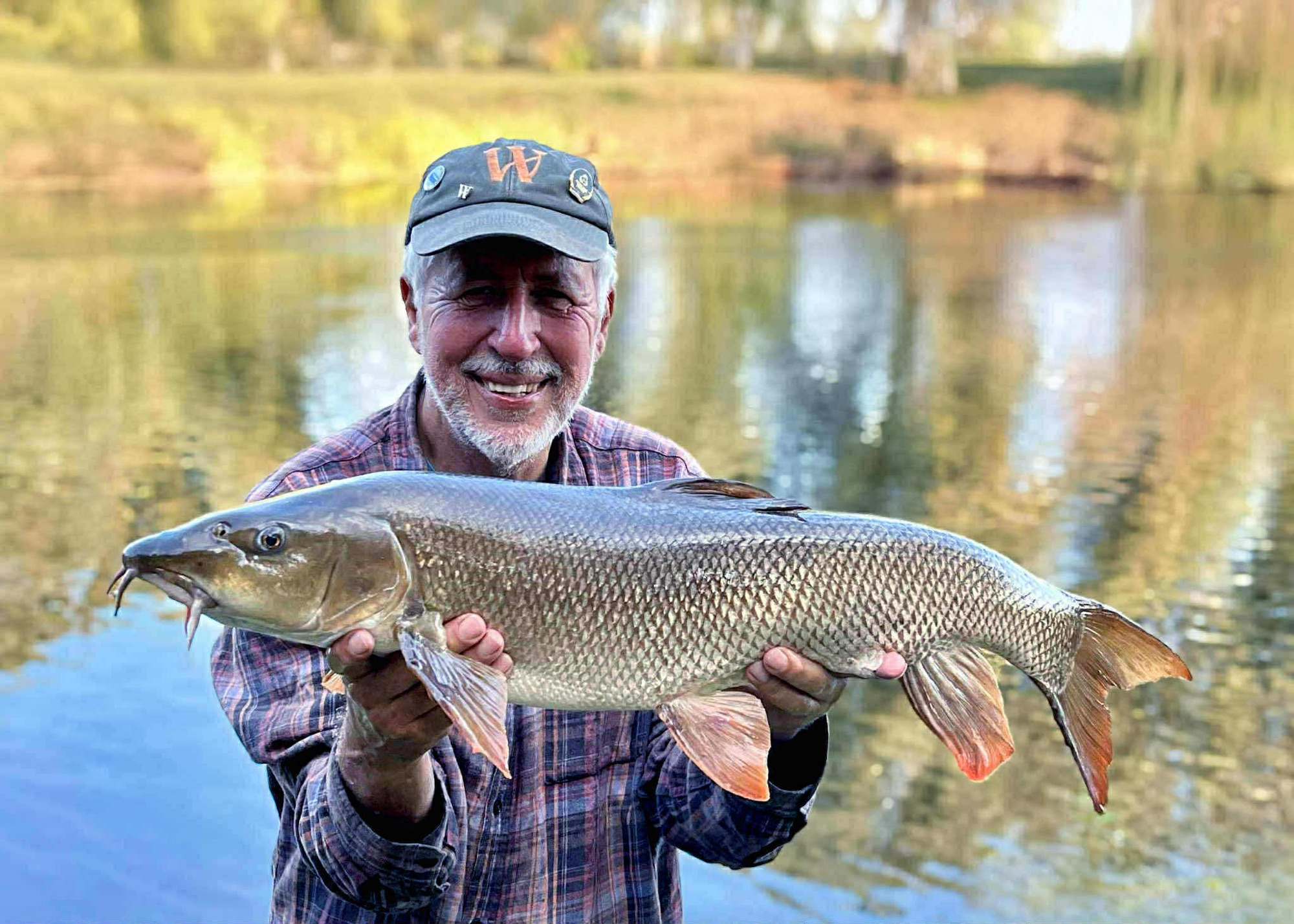
The overnight rain ensured that an already swollen Trent would be rising the next morning so Jamie and I opted for an early start to ensure that we were able to bag a couple of decent swims on the inside of a deep bend which would remain fishable in these conditions. It turned out to be a good choice, as my first fish came on the third cast and weighed in at a respectable 10.02. I would have been happy with that but half an hour later I found myself attached to an even heavier beast which put an alarming bend in my 1.75lb Greys barbel rod as it headed out into the strong flow. I was grateful for the 12lb line at this point, which enabled me to turn the fish and keep it out of the near bank snags prior to netting. Leaving it to rest in the landing net I knew I’d just caught something a bit special. Moments like this are best shared with friends, and of course I needed a picture. So I called Jamie to do the honours and as he lifted the barbel onto the mat while I prepared the scales he exclaimed “That’s bloody massive!” He wasn’t wrong, and this beautifully proportioned Trent barbel went exactly 14lbs – giving me a new personal best for the species.
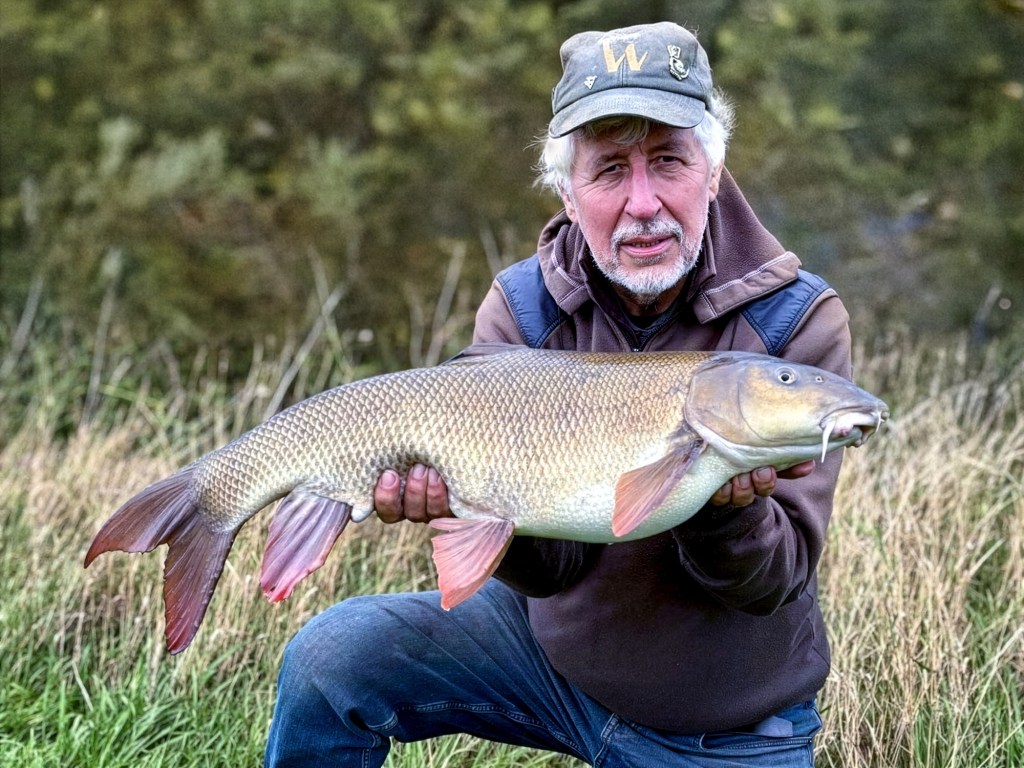
With two double-figure fish including a new PB before breakfast I was absolutely buzzing, and couldn’t care less what happened for the rest of the day. But the action continued with Jamie landing two nines and a ten-pounder and me getting a smaller third barbel before we packed up around 2pm to commence the long drive home. In difficult conditions on a rising river with tree trunks and all manner of rubbish piling down the current, we had managed six barbel for over 60lbs – champagne fishing at its best.
As the festive season approaches it seems that the rivers are finally getting into decent winter trim so I’m looking forward to trotting for chub, roach and grayling as we head into 2026. I hope you all have a great Xmas break and manage to catch some nice fish to see out the year.
 Fighting For Fishing
A great read as always, Martin. Tight lines!
Thanks mate. Happy Xmas to you!
great read Martin thank you for sharing hopefully see you on the bank one day